As preparation technologies continue to advance, Polyamide 6 has become a popular polymer material in various industries, including electronics, automotive, and telecommunications. Particularly, PA6 composites offer a wider range of structures and functional components.
However, when applied in these fields, PA6 composites often face extreme conditions such as high temperatures, flammability, electrical leakage, and short circuits, with flammability being one of the key indicators of whether PA6 composites can operate safely and effectively.
Unmodified PA6 has a flame retardant rating of UL94 V-2, with a limiting oxygen index (LOI) ranging from 20-22%. This means that when exposed to an open flame, PA6 burns quickly and has a tendency to drip, leading to the spread of the flame.
The situation becomes more complex with PA6 composites: some composite components can actually facilitate the combustion of PA6. For example, common glass fibers can accelerate the burning process due to the wick effect.
It is well known that industrial applications, such as automotive and electrical products, have strict flame retardant requirements for the materials used. Therefore, PA6, which balances good flame retardancy with mechanical properties, is of significant research and commercial value. This is especially true today, as the price of PA66 remains high, making high flame-retardant PA6 composites highly promising.
This article will begin with the underlying principles and analyze strategies to suppress the combustion of PA6, as well as the current applications of common flame retardants.
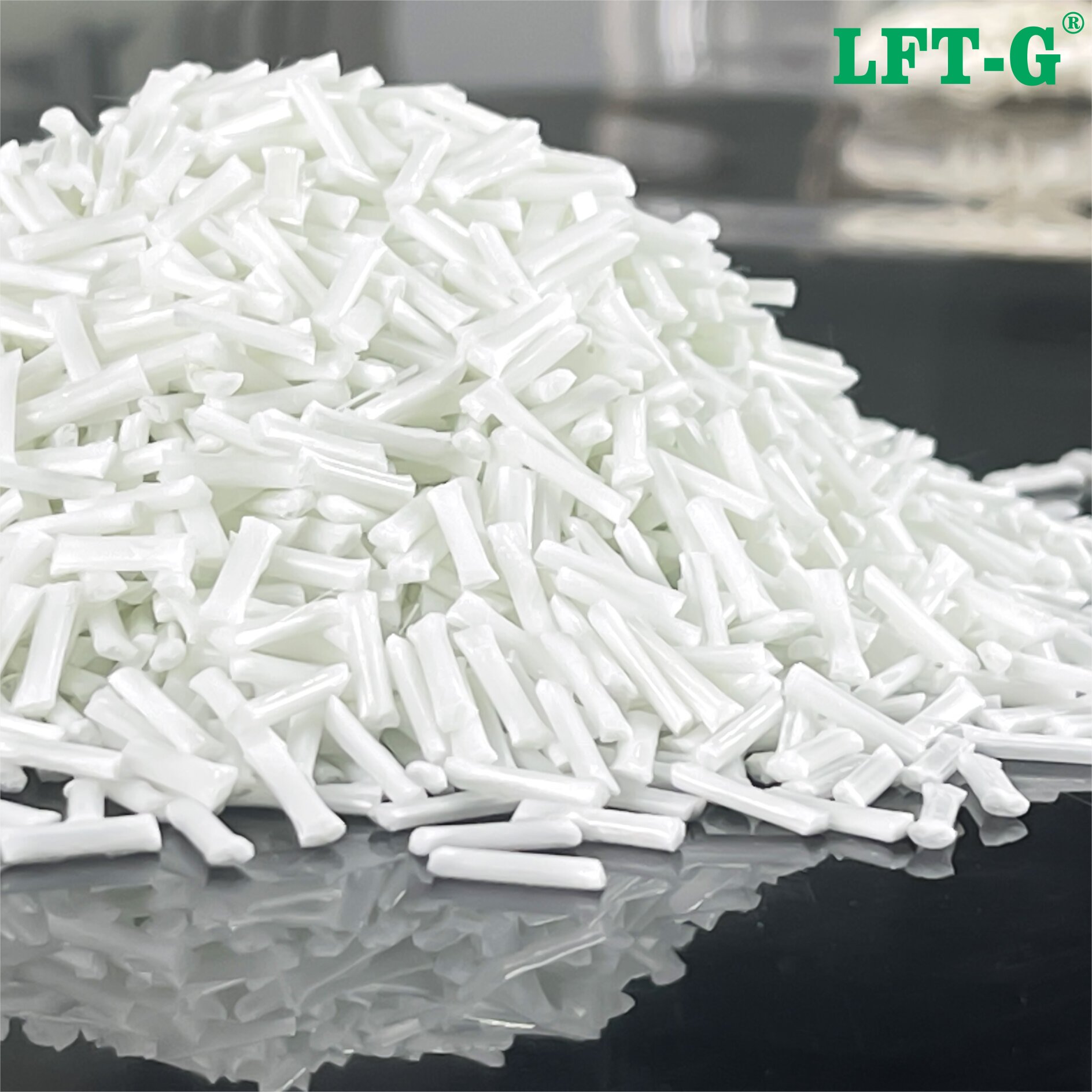
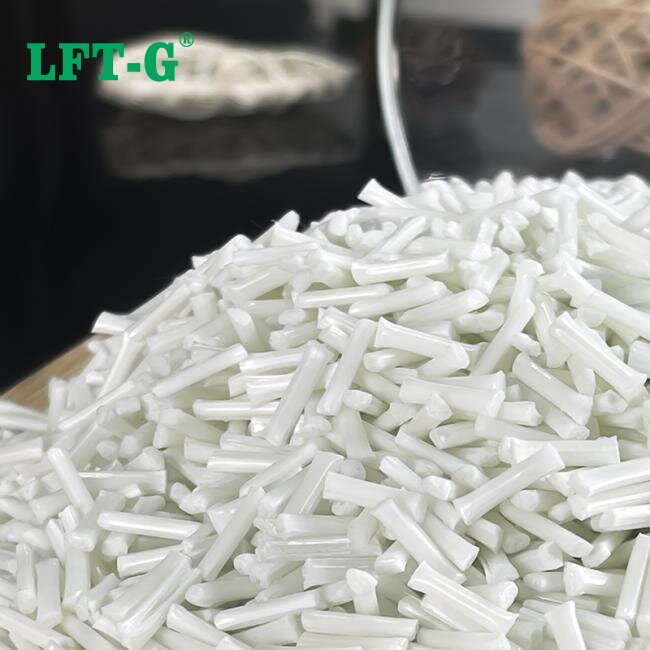
(Long Glass Fiber Reinforced Polyamide 6)
The Combustion Mechanism of PA6
To extinguish the combustion of PA6, it is essential to understand how the fire starts. Combustion is generally classified into three forms: evaporation combustion, pyrolytic combustion, and solid surface combustion. PA6, like most polymer materials, undergoes pyrolytic combustion.
The main combustion process is as follows:
* First, the material is heated, and when the overall temperature of the material rises to around 200°C, it begins to visibly soften and melt. The polymer molecules on the surface of the material start to undergo thermal oxidation and decomposition.
* As the temperature continues to rise, the thermal oxidation and decomposition reactions become more complete, generating a large number of free radicals. These free radicals combine with the methylene groups in the PA6 molecular structure, accelerating the decomposition process.
* The numerous polar bonds in PA6 give the material a strong hygroscopic property. Under high temperatures, hydrolysis of the amide bonds also occurs, with the final hydrolysis products being small carbon-containing combustible molecules, mainly lactams and cyclopentanones.
* These small combustible molecules, under the influence of high temperature diffusion and convection, mix fully with oxygen and eventually ignite. The heat generated during this process is not only released to the surroundings but also acts on the PA6 itself, meaning that even if the external heat source is removed, the combustion process will continue.
This is the combustion process of PA6 and most polymer materials. After understanding this process, we can better design strategies to improve the flame retardancy of PA6.
Flame Retardant Design of PA6
It is well known that the essence of flame retardancy is to prevent or slow down the effects of combustion factors through physical and chemical actions. For PA6, this involves four key factors: heat source, air, combustible material, and free radical reactions.
Adding flame retardants without changing the PA6 matrix is an important method to eliminate the combustion conditions of PA6. Different flame retardants work in different ways to exert their flame-retardant effects. Based on the specific mode of action of the flame retardant, they can be classified into three categories: condensed phase flame retardancy, gas phase flame retardancy, and synergistic flame retardancy.
Gas Phase Flame Retardancy Mode
This refers to the action of the flame retardant in the gas phase, where it suppresses or interrupts the combustion reaction of the combustible gas mixture.
There are two specific ways in which gas phase flame retardancy works:
1. The flame retardant decomposes upon heating to generate free radical scavengers, which interrupt the free radical reactions and thus suppress the combustion process.
2. The flame retardant decomposes upon heating to release inert gases, which fill the area near the combustion center, significantly diluting the concentration of oxygen and combustible gases near the combustion zone. This suppresses the formation of combustion conditions and plays a flame-retardant role.
Condensed Phase Flame Retardancy Mode
Condensed phase flame retardancy refers to the action of the flame retardant primarily in the condensed phase, where it delays or prevents the thermal decomposition of the polymer, thus inhibiting the polymer’s combustion.
There are two specific ways in which condensed phase flame retardancy works:
1. The flame retardant decomposes upon heating during combustion, absorbing a large amount of heat generated in the combustion process, thus preventing further combustion.
2. The flame retardant undergoes a chemical reaction at high temperatures, producing solid metal oxides (such as aluminum oxide, boron oxide, and magnesium oxide) or high-density vapors. These products can form a layer on the surface of the burning material, isolating the polymer from external substances and energy exchange, thereby suppressing the combustion process.
Synergistic Flame Retardancy Mode
In addition, some flame retardants simultaneously exhibit both gas phase and condensed phase flame retardancy mechanisms. These flame retardants are considered to operate under a synergistic flame retardancy mechanism. Since the flame retardant acts in both the gas and condensed phases, the combustion of the polymer is more effectively suppressed.
Therefore, in terms of effectiveness, flame retardants that exhibit synergistic flame retardancy can provide more efficient flame retardancy, thus reducing the amount of flame retardant needed in PA6.
Applications of Different Flame Retardants
Based on the method of combination between the flame retardant and the PA6 matrix, the flame retardants used in PA6 can be divided into two main categories: reactive flame retardants and additive flame retardants.
Reactive Flame Retardants
Reactive flame retardants are added during the polymerization or processing of PA6. These flame retardants can chemically graft onto the PA6 molecular chain, incorporating flame-retardant elements or groups into the PA6.
Reactive flame retardants have good stability and minimal impact on the inherent properties of PA6. However, the use of reactive flame retardants is associated with complex processing conditions and high costs. Therefore, these flame retardants are not easily applied in the large-scale industrial production of flame-retardant PA6 composites.
Additive Flame Retardants
In comparison, additive flame retardants are more economical and easier to use. They are the primary type of flame retardant used in the industrial production of flame-retardant PA6 composites. Among additive flame retardants, they can be further classified into several categories based on the chemical structure of their active components, including halogen-based, phosphorus-based, nitrogen-based, and inorganic flame retardants.
Different types of flame retardants have varying flame-retardant efficiencies, and the structure of the flame retardant also has a certain impact on the basic physical and mechanical properties of PA6.
Therefore, the key to producing high-performance flame-retardant PA is to comprehensively consider both flame retardancy and mechanical factors and to select the appropriate type of flame retardant.
* Halogen-Based Flame Retardants
Halogen-based flame retardants are widely used in PA6 due to their good compatibility with PA6 and high flame retardant efficiency.
Additionally, halogen-based flame retardants can be used synergistically with metal oxide flame retardants, phosphorus-based flame retardants, charring agents, etc., to enhance their flame-retardant effects. Common flame retardants used in PA6 include Decabromodiphenyl oxide (DBDPO), 1,2-bis(pentabromophenyl)ethane (BPBPE), brominated polystyrene (BPS), pentabromodiphenyl ether (PBDO), polybrominated polystyrene (PDBS), polyphosphoric acid pentabromide (PPBBA), and brominated epoxy resin (BER).
Some domestic researchers have attempted to develop decabromodiphenylethane as a replacement for decabromodiphenyl ether to solve the dioxin problem caused by flame retardants. Additionally, they combined decabromodiphenylethane with antimony trioxide to improve the flame retardancy of PA6. When the ratio of the two is 13:5, the flame retardancy of modified PA6 can reach UL94 V-0 grade, with other properties comparable to pure PA6.
* Phosphorus-Based Flame Retardants
Halogen-based flame retardants carry the risk of "secondary hazards" and severe environmental pollution issues. As such, halogen-free flame retardant alternatives are becoming the major trend in the development of flame retardants.
Among halogen-free flame retardants, phosphorus-based flame retardants have the highest production and the widest range of applications. In terms of flame retardant mechanism, phosphorus-based flame retardants primarily function through the condensed-phase flame retardancy mechanism.
1. Red Phosphorus
Red phosphorus is a typical inorganic flame retardant. As it contains only phosphorus, it significantly improves the flame retardancy of PA6 at just a 7% addition, achieving UL94 V-0 grade.
However, red phosphorus is chemically reactive and can oxidize during conventional storage. Furthermore, pure inorganic phosphorus has poor compatibility with organic PA matrices. To solve these issues, red phosphorus is typically prepared as a microencapsulated flame retardant.
Studies have shown that adding 16% microencapsulated red phosphorus to 15% glass fiber-reinforced PA6 can increase the material's oxygen index to 28.5%, achieving a UL94 V-0 grade flame retardancy.
2. Ammonium Polyphosphate
Ammonium polyphosphate is another important inorganic phosphorus-based flame retardant commonly used in PA6 materials. Research indicates that when used alone, ammonium polyphosphate needs to exceed 30% to show significant flame retardant effects.
Combining ammonium polyphosphate with other phosphorus-based flame retardants can improve its flame retardancy efficiency. Studies show that when the amount of ammonium polyphosphate reaches 25%, the peak heat release rate of the material decreases by 44.3%, and the total heat release decreases by 20.2%, significantly improving PA6’s flame retardancy.
However, the study also found that simply increasing the amount of ammonium polyphosphate cannot solve the issue of flaming drips during PA6 combustion. Therefore, it is necessary to add certain anti-drip agents to PA6 when using ammonium polyphosphate as a flame retardant.
* Nitrogen-Based Flame Retardants
Nitrogen-based flame retardants are also widely used as environmentally friendly, halogen-free flame retardants. They offer advantages such as low toxicity, good thermal stability, low cost, and non-corrosiveness.
Nitrogen-based flame retardants that contain triazine in their molecular structure are commonly used in PA6 flame retardant modifications. Melamine (MA) and its inorganic and organic salts are typical examples of such compounds.
1. Melamine (MA)
MA significantly improves the flame retardancy of PA6. To overcome the poor dispersion of MA in the PA6 matrix, it is typically blended with other components. BASF has developed the KR4025 series flame retardant by combining MA with fluorides, which, when used in PA6, imparts both high toughness and good flame retardancy to the material.
2. Melamine Cyanurate (MCA)
MCA is essentially a large planar complex formed by MA and cyanic acid under hydrogen bonding. In recent years, MCA has become a hot topic for PA6 flame retardant modification.
Melamine polyphosphate can be used alone or combined with inorganic oxides as a flame retardant. Research has shown that using a nitrogen-phosphorus synergistic flame retardant made from melamine and polyphosphate, at a 25% loading in glass fiber-reinforced PA6, can achieve a UL94 V-0 flame retardancy grade. Additionally, the material’s tensile strength, tensile modulus, notch impact strength, flexural strength, and flexural modulus can reach 76.8 MPa, 11.7 GPa, 4.5 kJ/㎡, 98 MPa, and 7.2 GPa, respectively.
* Inorganic Flame Retardants
Inorganic flame retardants take advantage of the non-combustibility of inorganic materials and offer advantages such as low harmful smoke generation, good thermal stability, and resistance to degradation.
Currently, metal hydroxides and inorganic nanofillers are the main types of inorganic flame retardants used in PA6.
Magnesium hydroxide, when used in combination with other flame retardants, also plays a good synergistic flame-retardant role. Domestic researchers have blended magnesium hydroxide with aluminum hydroxide in a 3:1 ratio, and when used in glass fiber-reinforced PA6, the material maintains a tensile strength above 100 MPa, flexural strength exceeding 150 MPa, and an oxygen index of 31.7%.
Inorganic nanofillers not only improve the flame retardancy of PA6 but also enhance the material’s wear resistance, electrical and thermal conductivity, and colorability. Moreover, inorganic nanofillers are inexpensive, and filling PA6 with them significantly reduces the overall cost of the material.
Commonly used inorganic nanofillers include limestone, montmorillonite, talcum powder, silica, silicone resins, wollastonite, calcium sulfate, etc. These inorganic fillers are non-combustible and contribute to accelerating PA6’s charring, reducing molten drips, and blocking the transfer of heat and small molecules. Combining inorganic nanofillers with other types of flame retardants in flame-retardant PA6 achieves ideal flame retardant effects, which has been the subject of much research.
LFT-G's PA6 composite materials can achieve a UL94 V-0 flame retardancy rating.
You can contact us at any time for further data and information.