Monodisperse PEG and polydisperse PEG are both important materials in pharmaceutical research, but they serve different development needs. The main difference is molecular weight distribution: monodisperse PEG consists of molecules with a defined chain length, while polydisperse PEG contains a distribution of polymer chains with different lengths.
Which is better for drug development? Monodisperse PEG is often preferred when a project requires precise molecular structures, well-defined linker lengths, and clearer structure–property comparisons. Polydisperse PEG remains useful for applications where a molecular weight distribution is acceptable and material cost, established processing methods, or bulk functionality are important considerations.
For researchers selecting PEG derivatives, the right choice depends on the drug design, conjugation chemistry, analytical requirements, and development stage. SINOPEG offers both conventional PEG derivatives and a dedicated monodisperse PEG product range for different biomedical research and drug development needs.
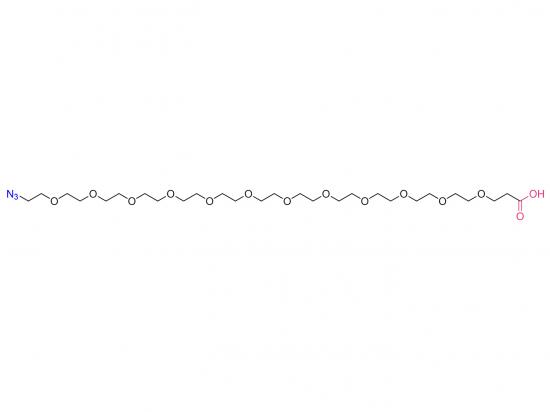
Example of a structurally defined PEG derivative used in molecular design and conjugation research.
What Is the Difference Between Monodisperse PEG and Polydisperse PEG?
PEG, or polyethylene glycol, is widely used in biomedical materials, drug conjugation, and drug delivery research. Its hydrophilic polymer chain can help modify the physicochemical properties of a molecule or material. However, PEG products can differ substantially in molecular weight distribution, chain length, terminal functional groups, and molecular architecture.
Monodisperse PEG has a defined number of repeating ethylene glycol units within a particular molecular structure. This allows researchers to work with a more precisely defined PEG chain length when designing linkers, conjugates, and other functional molecules.
Polydisperse PEG contains a distribution of chain lengths. Its reported molecular weight generally represents an average rather than the exact molecular weight of every molecule in the sample. The width of this distribution is commonly described by dispersity, expressed as Đ = Mw/Mn, where Mw is the weight-average molecular weight and Mn is the number-average molecular weight.
A dispersity value closer to one indicates a narrower molecular weight distribution. However, dispersity alone does not describe every aspect of a PEG product's quality, purity, end-group identity, or suitability for a specific application.
| Comparison factor | Monodisperse PEG | Polydisperse PEG |
|---|---|---|
| Molecular weight distribution | Defined chain length for a specific molecular species | Distribution of chain lengths |
| Structural definition | Well-defined molecular structure | Bulk material characterized by average molecular properties and distribution |
| Structure–property studies | Useful for isolating the effect of a defined chain length | Distribution may complicate interpretation of chain-length effects |
| Typical research needs | Defined linkers, molecular conjugates, precision-oriented design | Applications that can accommodate a molecular weight distribution |
| Material selection | Prioritize defined structure and application-specific characterization | Prioritize suitable distribution, specifications, functionality, and cost |
The distinction is not simply that one type is better quality than the other. The important question is whether the molecular weight distribution fits the intended application. Researchers can explore SINOPEG's conventional PEG and PEG derivative range when evaluating materials with different molecular weights and functional groups.
Why Does Molecular Weight Distribution Matter in Drug Development?
Molecular weight distribution becomes particularly important when PEG is incorporated into a drug molecule as a defined structural component rather than used only as a bulk polymer material.
When PEG is used as a linker or spacer, chain length can influence the distance between molecular components, conformational flexibility, hydrophilicity, and the spatial arrangement of attached groups. A distribution of chain lengths may therefore introduce additional molecular species into a conjugate preparation.
For example, if a research team is comparing two drug conjugates with different PEG spacer lengths, using defined monodisperse PEG linkers can make it easier to attribute observed differences to the intended structural change. Other variables, including conjugation site, purity, reaction conditions, and analytical methods, must still be controlled.
In contrast, a polydisperse PEG material may be appropriate when the application does not require a single chain length or when the desired material properties can be achieved using a characterized distribution.
Research published in pharmaceutical and polymer science literature has investigated how PEG chain length and dispersity influence the properties of PEG-modified molecules and nanomaterials. The impact is application-dependent, so researchers should avoid assuming that monodispersity automatically improves every biological or pharmacological outcome.
When Is Monodisperse PEG the Better Choice?
Monodisperse PEG is particularly useful when molecular structure needs to be defined precisely and changes in chain length are expected to influence the results of a study.
- Drug conjugate development: Defined PEG linkers can help researchers evaluate how linker length and structure affect conjugate properties.
- PROTAC research: Precisely defined linker segments can support systematic comparisons of molecular geometry and biological activity.
- ADC linker design: Structurally defined PEG spacers can help investigate the relationship between linker architecture and conjugate characteristics.
- Bioorthogonal conjugation: Defined chain lengths and terminal functional groups can support more controlled molecular assembly.
- Structure–activity relationship studies: Researchers can compare defined molecular structures without introducing an avoidable distribution of PEG chain lengths.
For these applications, the PEG chain length is only one selection factor. The terminal groups, linker stability, solubility, reaction compatibility, and required analytical purity should also match the research design.
SINOPEG provides specialized monodisperse PEG ADC linker products for researchers evaluating defined PEG structures in conjugate development. Product availability and specifications should be checked against the individual product listing.
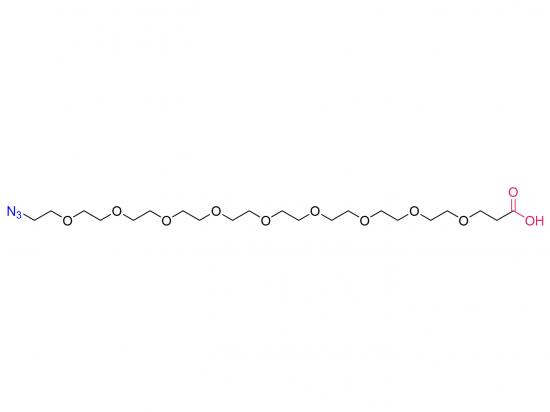
An example of a defined PEG chain with an azide functional group for further chemical modification.
When Is Polydisperse PEG Still Suitable?
Polydisperse PEG remains valuable in pharmaceutical research and industrial applications. A defined single-chain structure is not necessary for every use of PEG, and a molecular weight distribution does not automatically make a material unsuitable.
Polydisperse PEG may be a practical choice when the project requires bulk polymer functionality, when established processing methods already use a distributed polymer, or when the application has demonstrated acceptable performance with the specified material.
Depending on the formulation and research objectives, relevant considerations may include average molecular weight, molecular weight distribution, functional group content, residual impurities, viscosity, solubility, and batch consistency.
For these applications, the decision should be based on the actual material specification and performance requirements rather than the monodisperse or polydisperse label alone.
How to Select PEG for a Specific Drug Development Project
Choosing between monodisperse PEG and polydisperse PEG starts with defining the role of the polymer in the final system. The following questions can help narrow the options.
- Does the project require a defined molecular structure? If each linker unit must have a specific chain length, monodisperse PEG is generally the more direct option.
- Which terminal functional groups are required? Amino, carboxyl, azide, maleimide, NHS, and other functional groups support different conjugation strategies. Select the group that matches the intended chemistry.
- What molecular weight or chain length is appropriate? Choose based on the target molecule, desired spacer length, solubility, steric requirements, and experimental evidence.
- What analytical evidence is needed? Review molecular identity, purity, molecular weight distribution where applicable, end-group characterization, and the documentation available for the specific product.
- What are the project’s supply and budget requirements? Consider synthesis complexity, required quantity, lead time, batch requirements, and the cost of downstream characterization.
When a suitable catalog material is not available, a custom synthesis discussion may help establish the required structure, chain length, functional groups, and analytical criteria. SINOPEG also provides a customized synthesis service covering monodisperse PEG and other related materials.
What Should Researchers Check Before Ordering PEG Derivatives?
Before placing an order, confirm that the product specification matches the intended research use. A product name or nominal molecular weight alone may not provide enough information to assess suitability.
- Chemical identity, structure, and CAS number where applicable.
- Molecular weight or defined PEG chain length.
- Terminal functional groups and their intended reactivity.
- Purity, analytical methods, and available certificate of analysis.
- Storage conditions, packaging, and handling requirements.
- Availability of the requested quantity and any custom synthesis requirements.
For pharmaceutical and biomedical research, analytical documentation should be reviewed in the context of the intended application. A stated purity value alone does not establish suitability for a particular drug development program.
Frequently Asked Questions
Is monodisperse PEG always better than polydisperse PEG?
No. Monodisperse PEG is useful when a defined molecular structure is important. Polydisperse PEG remains suitable for applications that can accommodate a distribution of chain lengths. The better option depends on the project's structural, analytical, and practical requirements.
What is the main difference between monodisperse PEG and polydisperse PEG?
The main difference is molecular weight distribution. Monodisperse PEG has a defined chain length for a specific molecular species, whereas polydisperse PEG contains molecules with different chain lengths and is commonly characterized by average molecular weight and dispersity.
Why is monodisperse PEG useful for drug conjugation?
It provides a defined PEG spacer length and molecular structure, helping researchers investigate how linker design affects conjugate properties. It does not eliminate other sources of variation, such as conjugation site, reaction conditions, or product purity.
Can polydisperse PEG be used in pharmaceutical research?
Yes. Polydisperse PEG is widely used in pharmaceutical and biomedical research. Its suitability depends on the intended application, material specifications, quality requirements, and supporting experimental data.
How should researchers choose a PEG derivative?
Researchers should consider molecular weight or chain length, terminal functional groups, chemical compatibility, purity, analytical documentation, and the intended application. When catalog products do not meet the requirements, custom synthesis may be considered.
Does monodisperse PEG guarantee better drug efficacy or safety?
No. Monodispersity can improve structural definition, but it does not independently guarantee better efficacy, safety, pharmacokinetics, or clinical outcomes. Those properties must be evaluated for the specific molecule and formulation.
References
The following scientific publications provide background on PEGylation, monodisperse PEG design, and the effects of PEG dispersity in drug and nanomaterial research.
- Veronese FM, Pasut G. PEGylation, successful approach to drug delivery. Drug Discovery Today. 2005;10(21):1451–1458.
- Kinbara K. Monodisperse engineered PEGs for bio-related applications. Polymer Journal. 2018;50:689–697.
- Yu Z, et al. Application of Monodisperse PEGs in Pharmaceutics: Monodisperse Polidocanols. Molecular Pharmaceutics. 2017;14(10):3473–3479.
- Tian X, Yuan Y. Impacts of polyethylene glycol (PEG) dispersity on protein adsorption, pharmacokinetics, and biodistribution of PEGylated gold nanoparticles. RSC Advances. 2024;14:20757–20764.
For product selection, researchers should evaluate the specifications and documentation of the individual PEG derivative against their experimental requirements. The information in this article is intended for scientific and technical reference and should not be interpreted as a guarantee of drug performance or clinical outcomes.